
Attic Ladder Types:
A Comprehensive Guide to Wood, Aluminum, and Steel
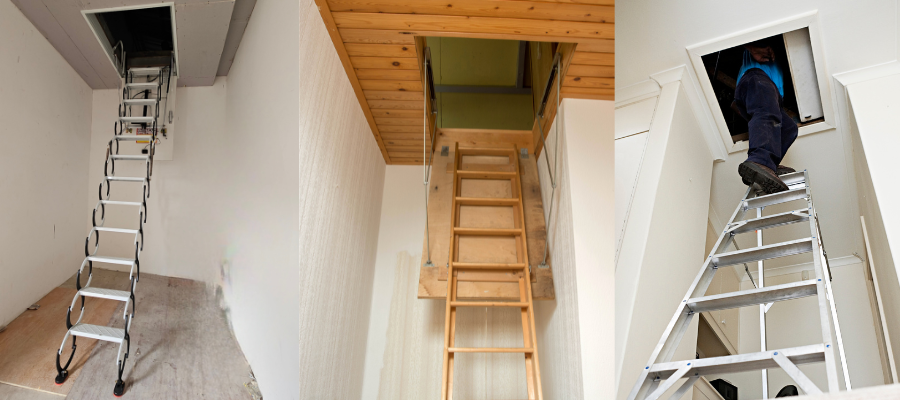
When it comes to accessing your attic, choosing the right ladder is crucial for both safety and convenience. There are three main types of attic ladders available: wood, aluminum, and steel.
Each has its own set of advantages and disadvantages, but among them, the steel attic ladder stands out as the most reliable and durable choice.
In this post, we'll take a closer look at these three materials, with a focus on why steel is often the best option.
Wood Attic Ladders
Wooden attic ladders have been a traditional choice for homeowners for many years. They offer a classic, warm look that blends well with certain home interiors. However, wood ladders come with several drawbacks.
Disadvantages of Wood Attic Ladders:
- Heavy Weight: Wooden ladders are typically much heavier than other materials, making them harder to lift and operate.
- Susceptibility to Damage: Wood can easily warp, crack, or splinter over time, especially in areas with fluctuating humidity or temperature.
- Maintenance Needs: Regular upkeep, including sanding and sealing, is required to maintain the ladder's condition and prevent rotting.
- Limited Weight Capacity: Wood ladders may not support as much weight as aluminum or steel models, limiting their overall safety and durability.
Aluminum Attic Ladders
Aluminum ladders are another popular option due to their lightweight nature and corrosion resistance. While they can be easier to handle compared to wooden ladders, they still have several limitations.
Disadvantages of Aluminum Attic Ladders:
- Less Sturdy: Aluminum ladders can feel flimsy compared to steel options, especially when used frequently. They may not offer the same level of stability when climbing.
- Lower Weight Capacity: While lightweight, aluminum ladders tend to have lower weight limits than steel ladders, which can be a concern for heavier individuals or when carrying large items to the attic.
- Potential for Dents: Although they are resistant to rust, aluminum ladders are prone to dents, which can compromise their structural integrity.
- Less Aesthetic Appeal: The industrial look of aluminum may not suit every home’s decor, especially in traditional or rustic settings.
Steel Attic Ladders: The Best Choice
Steel attic ladders are increasingly becoming the go-to choice for homeowners looking for durability, strength, and ease of use. While they may be slightly more expensive upfront, the investment pays off in the long run.
Advantages of Steel Attic Ladders:
- Incredibly Durable: Steel is known for its strength and resilience. Unlike wood or aluminum, steel ladders can withstand heavy use and are less prone to damage from wear and tear.
- Higher Weight Capacity: Steel ladders can support much more weight, making them safer for heavier individuals and providing peace of mind when carrying bulky items.
- Low Maintenance: Steel requires little maintenance compared to wood, as it is resistant to warping, cracking, or rotting. It's also impervious to rust if properly treated.
- Longevity: A steel attic ladder can last for decades without losing its strength, making it a long-term investment in your home.
- More Stable and Secure: The robust design of steel ladders ensures better stability when climbing, reducing the risk of accidents or slips.
The Safety Risks of Wood and Aluminum Attic Ladders vs. Steel Attic Ladders
Attic ladders provide convenient access to your attic space, but it's important to consider the safety of the ladder you choose. Wood and aluminum folding attic ladders are often lightweight and easy to store, but they come with some risks. These ladders are prone to injury, especially if they snap shut unexpectedly when being folded away. The folding action can sometimes hit you in the face or head, which can be painful and dangerous. This is typically due to the lack of secure locking mechanisms or the ladder being folded too quickly.
On the other hand, steel attic ladders are generally much safer and more user-friendly. They tend to be sturdier and have better-designed mechanisms to prevent sudden folding. The steel design is also less prone to the sharp, unexpected movements that are common with wood or aluminum ladders, making them a safer choice for regular use.
For optimal safety, always ensure that the ladder you are using is properly secured and locked before attempting to fold it away, and consider switching to a steel ladder if safety is a top priority.
Conclusion
While wooden and aluminum attic ladders may offer a traditional or lightweight solution, the advantages of steel far outweigh the disadvantages of the other materials.
Steel ladders offer unmatched durability, stability, and weight capacity, making them the most reliable and long-lasting option for any homeowner.
When choosing an attic ladder, it's clear that steel provides the best value and safety, ensuring that accessing your attic remains both easy and secure for years to come.
Ready to Maximize Your Attic Space?
Whether you need supply only or professional installation, our team is here to help you choose the perfect attic ladder.
Request a Free Quote